
In short: the safest way to remove dead skin from feet is to soften it first, then remove it gently. Soak your feet for 10 minutes, file thick areas lightly in one direction, and moisturize. For a deeper reset, an exfoliating foot peel (peeling socks) sheds the dead layer over one to two weeks. Never cut skin with a blade or razor at home.
Why dead skin builds up on feet
The soles and heels carry your weight all day, so skin there thickens to protect itself. Dry weather, open footwear, walking barefoot and long hours standing all add to it. Thick skin is not a problem in itself, but when it dries it can crack, and it can feel rough and look yellowish. The NHS explains how pressure and friction cause corns and calluses.
Should dead skin be removed from feet?
Some thick skin is protective, so the aim is to soften and thin it, not remove it completely. Remove enough that the skin is smooth and flexible. Over-filing makes skin sore and can make it thicken faster.
5 safe ways to remove dead skin from feet
1. Soak and file
Soak your feet in warm water for about 10 minutes. Pat dry, then use a foot file or pumice stone on thick areas, gently and in one direction. Stop before it feels sore. Do this once or twice a week. Moisturize afterwards. A warm Epsom salt foot soak works well before filing.
2. Foot scrub
A sugar or salt scrub polishes rough skin during a pedicure. It is gentler than filing and good for upkeep. A VOESH Pedi in a Box includes a soak and sugar scrub in single-use packets.
3. Exfoliating foot peel (peeling socks)

Peeling socks hold a liquid with exfoliating acids against the feet. VOESH Peeling Socks use sugarcane-derived AHA and BHA with lavender and herb extracts. Soak your feet for 10 minutes, dry them, wear the socks for 90 to 120 minutes (never longer), then wash your feet. Dead skin starts to lift after 7 to 10 days. Let it come away on its own; do not pull it. Use one treatment every four to six weeks at most. Full directions: how to use foot peeling socks.
4. Moisturizers with urea or lactic acid
Creams with urea or lactic acid soften and loosen rough skin with daily use. A review of urea in dermatology describes its softening and moisturizing effects.
5. Heel socks to keep it soft
Once the dead skin is gone, keep the new skin soft. VOESH Moisturizing Heel Socks have a jojoba and olive oil gel lining; wear them overnight two or three times a week. See how to use heel socks.
What not to do
- No blades or razors. Cutting skin at home can cause deep cuts and infection.
- No metal graters on wet skin. They remove too much too fast.
- No long, hot soaks. More than 15 minutes dries skin out.
- No peeling socks on broken skin, cuts or eczema, during pregnancy without asking your doctor, or with diabetes without medical advice.
A simple plan for soft feet
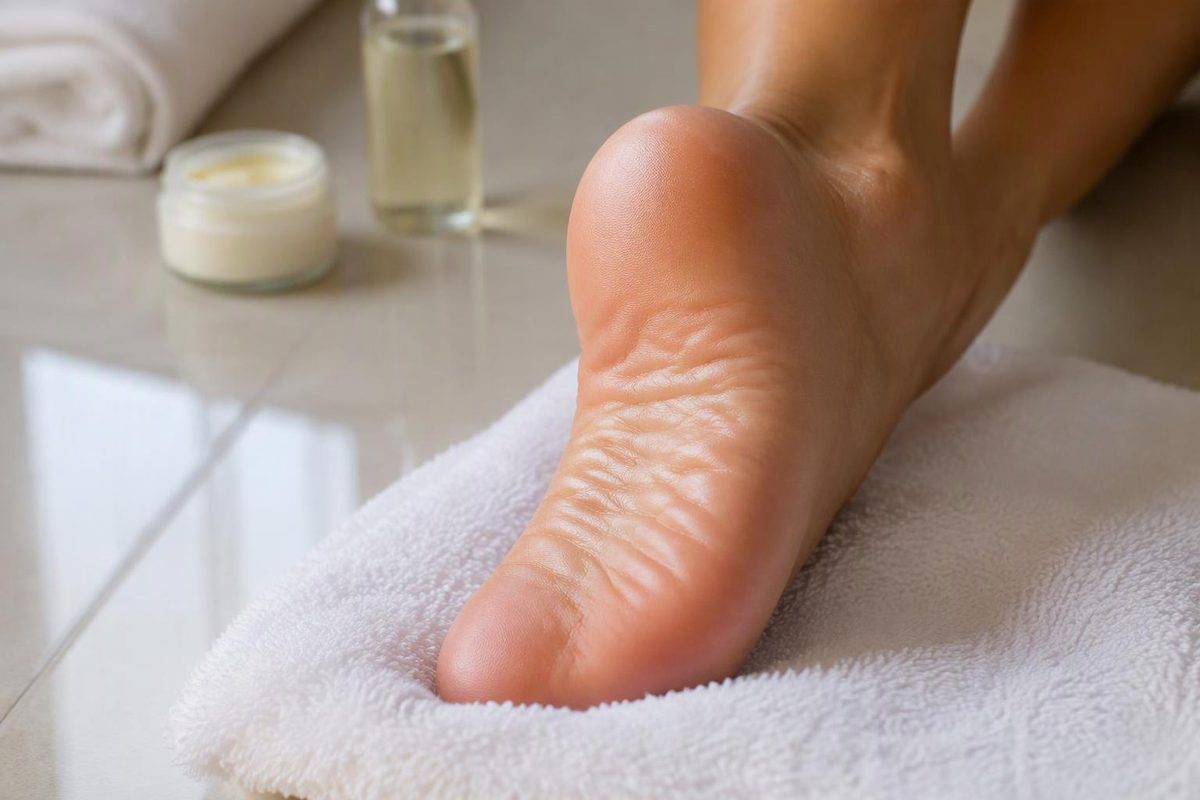
Soft, smooth heels come from steady care, not from cutting skin away.
| How often | What to do |
|---|---|
| Every night | Moisturize and wear socks |
| Once or twice a week | Soak and file gently; heel socks |
| Every one to two weeks | A full pedicure with scrub |
| Every four to six weeks, if needed | A foot peel for thick, rough skin |
For winter, see our foot care in winter routine, and for deep cracks, cracked heels: causes and treatment.
When to see a doctor
See a doctor or podiatrist if the skin is painful, bleeds, has deep cracks, looks infected, or if you have diabetes or poor circulation. DermNet's guide to cracked heels explains when they need treatment.
Frequently asked questions
What is the fastest way to get dead skin off your feet?
Soak for 10 minutes and file gently. For thick skin, a foot peel works over one to two weeks. Avoid blades.
Should dead skin be removed from feet?
Soften and thin it, but do not remove all of it. Some thick skin protects the soles.
How often can I use peeling socks?
Once every four to six weeks at most, after the previous peel has finished.
Which oil helps with dead skin on feet?
Oils such as jojoba, olive and coconut soften skin but do not remove it. Use them after filing to keep skin soft.
Is it safe to use a pumice stone?
Yes, gently, on softened skin, once or twice a week. Rinse and dry the stone after use.
Why does dead skin come back?
Pressure and dryness keep thickening the skin. Regular moisturizing and comfortable footwear slow it down.
Sources and further reading
Further reading from dermatology and health organizations:
- NHS: Corns and calluses
- American Academy of Dermatology: How to care for dry, cracked heels
- DermNet: Cracked heels
- Piquero-Casals J et al. Urea in Dermatology: A Review of its Emollient, Moisturizing, Keratolytic, Skin Barrier Enhancing and Antimicrobial Properties. Dermatol Ther (Heidelb), 2021 (PubMed)