
In short: feet dry out faster in winter because cold air holds less moisture, and hot water, heaters and closed shoes make it worse. Foot care in winter comes down to a five-minute nightly routine: wash with lukewarm water, dry well, file gently if the skin is thick, moisturize, and cover with socks. For cracked heels, add moisturizing heel socks two or three nights a week.
Why feet get so dry in winter
- Dry air: cold air holds less water, and indoor heaters dry it further.
- Hot water: long hot baths strip the skin's natural oils.
- Few oil glands: the soles have sweat glands but no oil glands, so they rely on moisturizer.
- Pressure: heels carry your weight. Dry, thick skin on the heel can split into cracks.
- Open footwear indoors: chappals and bare feet on cold floors add friction and dryness.
The American Academy of Dermatology's winter skin survival kit lists the same causes for the rest of the body.
A 5-minute winter foot care routine
- Wash with lukewarm water, not hot, and a mild soap.
- Dry well, including between the toes, to avoid fungal infections.
- File gently two or three times a week if the heels are thick. Use a foot file or pumice on dry or slightly damp skin, in one direction, and stop before the skin feels sore.
- Moisturize with a thick cream. Creams with urea or lactic acid help with rough skin; plain petroleum jelly works too.
- Cover with cotton socks at night so the cream stays on your feet, not your sheets.
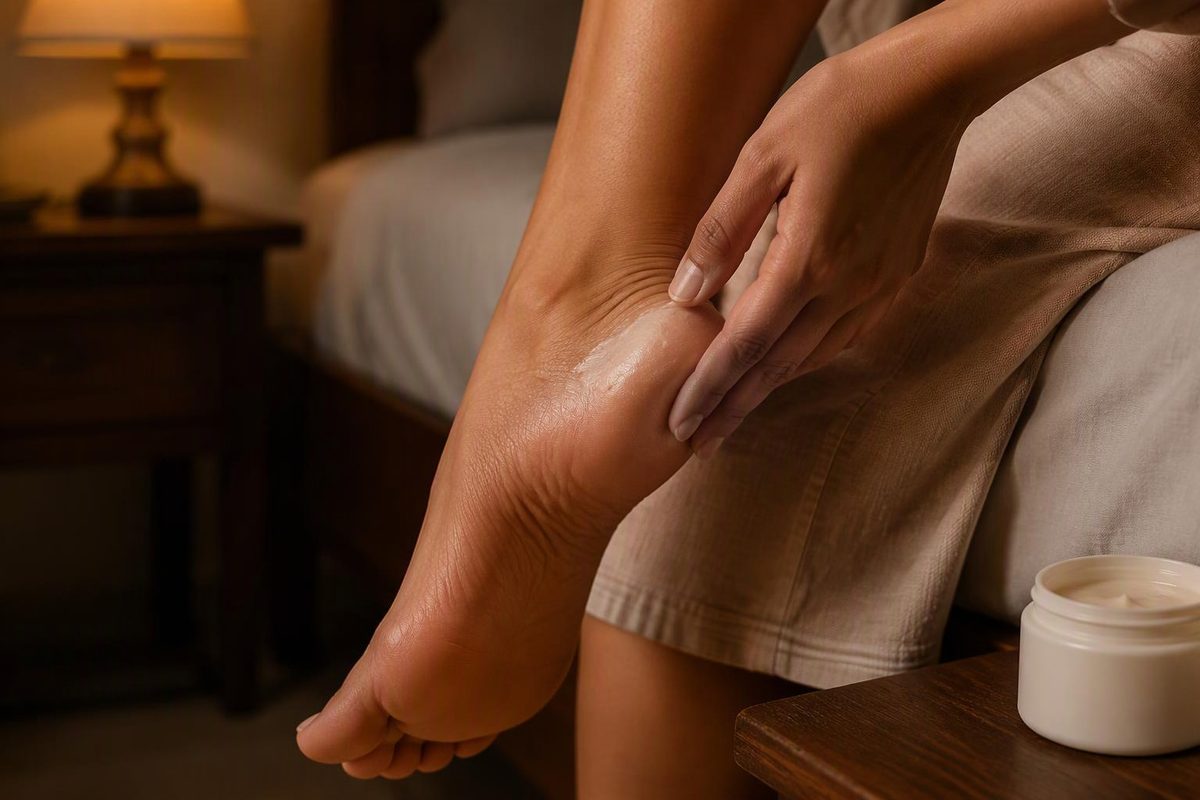
Moisturize at night, when feet can rest under socks.
The AAD's guide to dry, cracked heels recommends the same steps. A review of moisturizers for foot dryness found that regular moisturizing helps, especially products with urea.
Heel socks: an easy upgrade

VOESH Moisturizing Heel Socks have a gel lining with jojoba oil and olive oil that sits over the heel. Wash and dry your feet, slip them on, and wear them for at least 30 minutes, or overnight for dry, cracked heels. Use them two or three nights a week until the skin is smooth, then once a week. They can be hand-washed and reused up to 50 times. Our guide to how to use heel socks has the full method.
If the skin on your heels is thick, hard or flaking, exfoliate first. See how to use foot peeling socks and our guide to cracked heels: causes and treatment.
A weekly treat: an at-home pedicure
Once a week or once a fortnight, a full pedicure keeps feet soft through winter: soak, scrub, mask and massage cream. A VOESH Pedi in a Box has each step in a single-use packet. A warm Epsom salt foot soak is a simpler option. Keep soaks to 10 to 15 minutes; longer soaks can dry skin out.
Winter habits that help your feet
- Wear socks indoors on cold floors.
- Choose shoes that fit well and do not rub the heel.
- Keep toenails short and cut straight across.
- Drink enough water; dry skin shows first on hands and feet.
- Check your feet once a week for cracks, redness or sores.
When to see a doctor
See a doctor if cracks are deep, bleed or hurt when you walk, if there is redness, swelling or pus, or if you have diabetes or poor circulation. DermNet's page on cracked heels describes when they need medical care. People with diabetes should not file, soak or use exfoliating products without their doctor's advice.
Frequently asked questions
How do I take care of my feet in winter?
Use lukewarm water, dry well, moisturize every night with a thick cream, wear socks and file thick skin gently a few times a week.
Why do my heels crack in winter?
Cold, dry air and hot water dry the skin, and the heel's thick skin splits under pressure when it loses flexibility.
Why put petroleum jelly on feet overnight?
It seals moisture in. Applied after washing and covered with socks, it softens dry heels by morning.
Do heel socks work?
For dry heels and cracks caused by dryness, yes. The gel lining keeps moisturizing oils against the skin while you rest.
How often should I do a pedicure in winter?
Every one to two weeks is plenty. A short nightly routine matters more.
Is foot soaking good in winter?
A short, warm soak of 10 to 15 minutes softens skin before filing. Always moisturize afterwards.
Sources and further reading
Further reading from dermatology and health organizations: