
In short: feet dry out because the soles have no oil glands, carry your whole weight, and spend the day in dry air, open sandals or hot closed shoes. The best remedy for very dry feet is simple: soak briefly, exfoliate gently once a week, and apply a thick moisturizer every night, ideally with urea or lactic acid, under socks or heel socks. If dryness comes with itching, peeling between the toes, or pain, see a doctor.
What is the main cause of dry feet?
The skin on the soles has many sweat glands but no oil glands, so it depends on moisturizer to stay soft. Common triggers include:
- Dry winter air and air conditioning.
- Walking barefoot or in open sandals.
- Long hot showers and harsh soaps.
- Standing for many hours.
- Age: skin makes less oil and holds less water over time.
- Conditions such as diabetes, thyroid problems, eczema and athlete's foot.
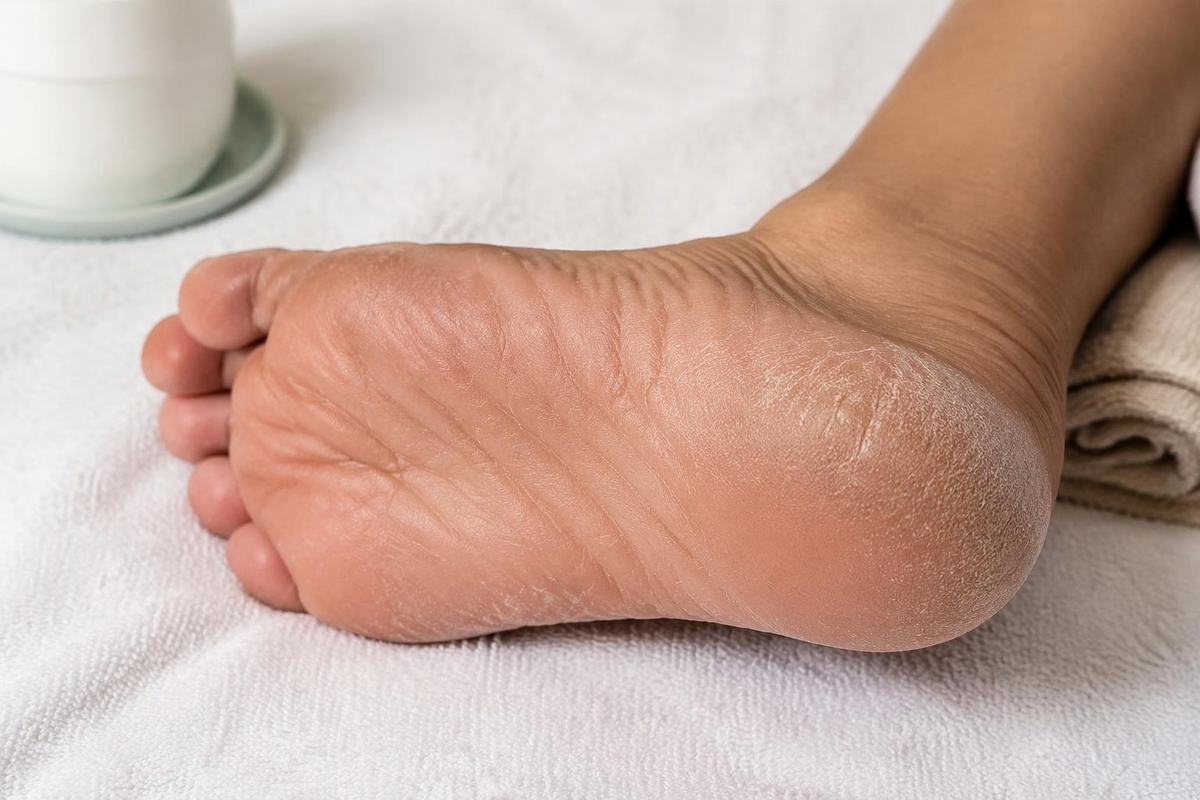
The soles have no oil glands, so they rely on you to keep them moisturized.
The American Academy of Dermatology's tips to relieve dry skin apply to feet too: lukewarm water, gentle cleansers and moisturizer straight after washing.
What is the best remedy for very dry feet?
- Soak in lukewarm water for 5 to 10 minutes, a few times a week.
- Exfoliate gently once a week with a foot file or scrub. See how to remove dead skin from feet.
- Moisturize every night with a thick foot cream. Creams with urea or lactic acid help soften very dry, thick skin.
- Lock it in with cotton socks or moisturizing heel socks.
- Repeat for two weeks; most dry feet improve quickly with daily care.

VOESH Moisturizing Heel Socks have a gel lining with jojoba and olive oil that sits against the heel. Wear them for 30 minutes, or overnight for very dry skin, over your foot cream. For cracked heels, wear them two or three nights a week until heels are smooth, then once a week. Each pair can be washed and reused up to 50 times. See how to use heel socks.
How do I stop getting dry feet?
- Moisturize your feet every night, not just when they crack.
- Wear closed, comfortable shoes more often in winter.
- Avoid very hot water and harsh soaps on feet.
- Dry well between the toes after washing.
- Drink enough water and eat a balanced diet.
For winter care, see foot care in winter. For deep cracks, read cracked heels: causes and treatment. Does foot cream differ from body lotion? See foot cream vs body lotion.
When dry feet need a doctor
See a doctor if you have diabetes and notice dry, cracked skin, cuts or sores on your feet; if dryness comes with itching, redness or peeling between the toes, which can be athlete's foot (see the NHS page on athlete's foot); or if cracks bleed, hurt or do not improve after two weeks of care.
Frequently asked questions
What is the main cause of dry feet?
The soles have no oil glands, and dry air, open footwear, hot water and standing for long hours dry them further.
What is the best remedy for very dry feet?
Nightly thick moisturizer, ideally with urea or lactic acid, under socks, with gentle weekly exfoliation.
How do I stop getting dry feet?
Moisturize every night, use lukewarm water, wear closed shoes in winter, and dry between your toes.
What vitamin deficiency causes dry feet?
Dry skin is rarely caused by a vitamin deficiency alone. If you suspect one, ask a doctor rather than taking supplements on your own.
Is Vaseline good for dry feet?
Yes, as a seal over a moisturizer at night, under socks.
How long does it take to fix dry feet?
Often one to two weeks of nightly care.
Sources and further reading
Further reading from dermatology and health organizations: