
In short: textured skin on the face means skin that looks or feels uneven: rough patches, small bumps, enlarged pores or marks left by acne. The most common causes are dead skin buildup, dryness, clogged pores and sun damage. Gentle exfoliation once or twice a week, daily moisturizer and sunscreen improve most surface texture within weeks. Deep acne scars need a dermatologist.
What textured skin looks like
- Rough or dry patches that catch makeup.
- Small flesh-colored bumps, often on the forehead or chin (closed comedones).
- Visible pores, especially on the nose and cheeks.
- Uneven skin texture from acne marks or shallow scars.
- Fine lines that look deeper when skin is dehydrated.
What causes textured skin on the face
- Dead skin buildup. Skin renews itself, but older cells can stick to the surface, especially when skin is dry.
- Dehydration and dryness. Dry skin looks rough and catches light unevenly.
- Clogged pores. Oil and dead cells form small bumps. DermNet describes these as comedones.
- Sun exposure. Over years, sun thickens the outer layer and makes texture rougher.
- Acne and picking. Inflamed spots can leave marks and small scars.
- Heavy or pore-clogging products on oily skin.
A review of facial pores explains how oil, age and sun change how pores look.
How to improve skin texture
1. Exfoliate gently, once or twice a week
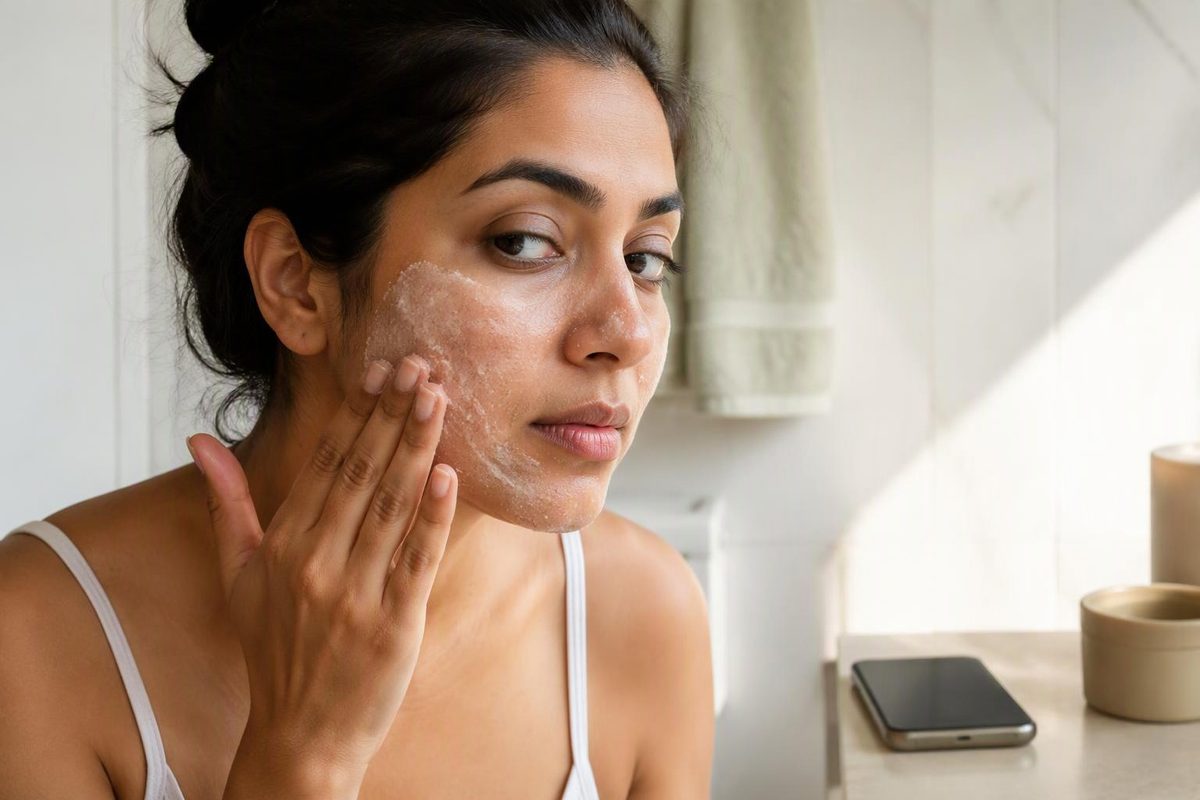
A gentle exfoliant once or twice a week lifts the dead cells that make skin feel rough.
Exfoliating removes the dead cells that make skin feel rough. Chemical exfoliants such as lactic acid are usually kinder than gritty scrubs. The American Academy of Dermatology explains how to exfoliate safely at home: be gentle, and stop if skin turns red or stings.

The Repêchage One-Minute Exfoliating Mask combines lactic acid with tiny rice bran wax spheres, plus seaweed, lemongrass and cucumber. Apply a thin layer to the face and neck, leave it for one minute and rinse. Our guide to exfoliation with Repêchage covers how often, and enzyme peel vs glycolic peel compares stronger options.
2. Hydrate every day
A hydrating mist and a moisturizer make texture look smoother within days. Dehydrated skin can be oily and rough at the same time. See our home regimen for dehydrated skin.
3. Keep pores clear
Cleanse twice a day, remove sunscreen and makeup fully at night, and choose non-comedogenic products if you get bumps. For oily skin, see our T-Zone Balance home regimen.
4. Sunscreen every morning
It protects the progress you make and slows sun-related roughness over time.
5. Hands off
Picking bumps turns a small problem into a mark.
A weekly routine for smoother skin
| Day | Night routine |
|---|---|
| Mon, Thu | Cleanse, exfoliating mask, mist, moisturizer |
| Other nights | Cleanse, mist, serum, moisturizer |
| Every morning | Cleanse, mist, moisturizer, sunscreen |
A professional facial every four to six weeks adds deeper cleansing and careful extraction. See professional facial steps.
When to see a dermatologist
See a dermatologist for deep or pitted acne scars, persistent bumps that do not respond to gentle care, or texture with itching, redness or scaling. Treatments such as prescription retinoids, peels and laser are best done under medical care. Not sure where to start? Ask for a free skin consultation.
Frequently asked questions
How do I get rid of textured skin on my face?
Exfoliate gently once or twice a week, moisturize daily, wear sunscreen and avoid picking. Deep scars need a dermatologist.
What is the reason for textured skin?
Usually dead skin buildup, dryness, clogged pores, sun exposure or acne marks.
How long does it take to improve skin texture?
Surface roughness improves within two to four weeks. Marks and pores take longer.
Is a scrub good for textured skin?
Gritty scrubs can irritate. A gentle chemical exfoliant, such as lactic acid, is usually kinder.
Can dry skin cause textured skin?
Yes. Dry skin holds on to dead cells and looks rough. Hydration helps quickly.
Does drinking water improve skin texture?
Staying hydrated supports your skin, but topical moisturizer and exfoliation make the visible difference.
Sources and further reading
Further reading from dermatology organizations and published research: