
In short: a professional facial usually follows the same path: a short consultation, cleansing, exfoliation, massage, a treatment mask, and a finishing serum, moisturizer and protection. Most take 45 to 90 minutes. What changes from facial to facial is the products and the steps chosen for your skin.
This guide walks through the facial steps one by one, what you will feel, how long a facial takes, how to prepare, and how Repêchage professional facials are built.
The facial steps, one by one
1. Consultation
Your therapist asks about your skin, your routine and any concerns, and looks at your skin closely. This is the time to mention allergies, sensitivity, pregnancy, recent treatments, and any medicines or prescription creams you use, such as retinoids.
2. Cleansing
Makeup, sunscreen and the day's buildup are removed, often with two cleanses: one to lift makeup and one to clean the skin. In Repêchage facials, the cleanser often comes in a single-use packet opened for you.
3. Exfoliation
Dead surface cells are removed so the skin looks smoother and the next products spread evenly. Depending on the facial and your skin, this can be a gentle scrub, an enzyme exfoliant or a mild peel. In Repêchage facials, the Vita Cura 5 Phase Firming Facial uses an enzymatic micropeel and the Biolight Miracle Facial a mild glycolic peel with fruit acids. Our guide to the enzyme peel vs glycolic peel explains the difference.
4. Extractions, if needed
Some facials include careful removal of blackheads by a trained therapist. It is optional, and it should never be painful or leave marks. Say so if you prefer to skip it.
5. Massage
Massage is often the part people enjoy most. Therapists use classic movements: long gliding strokes (effleurage), gentle kneading (petrissage) and light tapping (tapotement), usually on the face, neck, shoulders and upper chest. Our guide to face massage at home shows a gentle version you can do between visits.
6. Treatment mask
A mask chosen for your skin goes on and stays for a set time, often 10 to 20 minutes. It may feel cool, warm or simply calm. Some facials use more than one mask; the Repêchage Four Layer Facial sets a warm mineral mask over a cool seaweed mask.
7. Finishing
Serum, eye cream, moisturizer and a protective finish are applied. In the day, sunscreen should be the last step.
8. Aftercare advice
Your therapist tells you how to care for your skin over the next few days and which home products would continue the work.
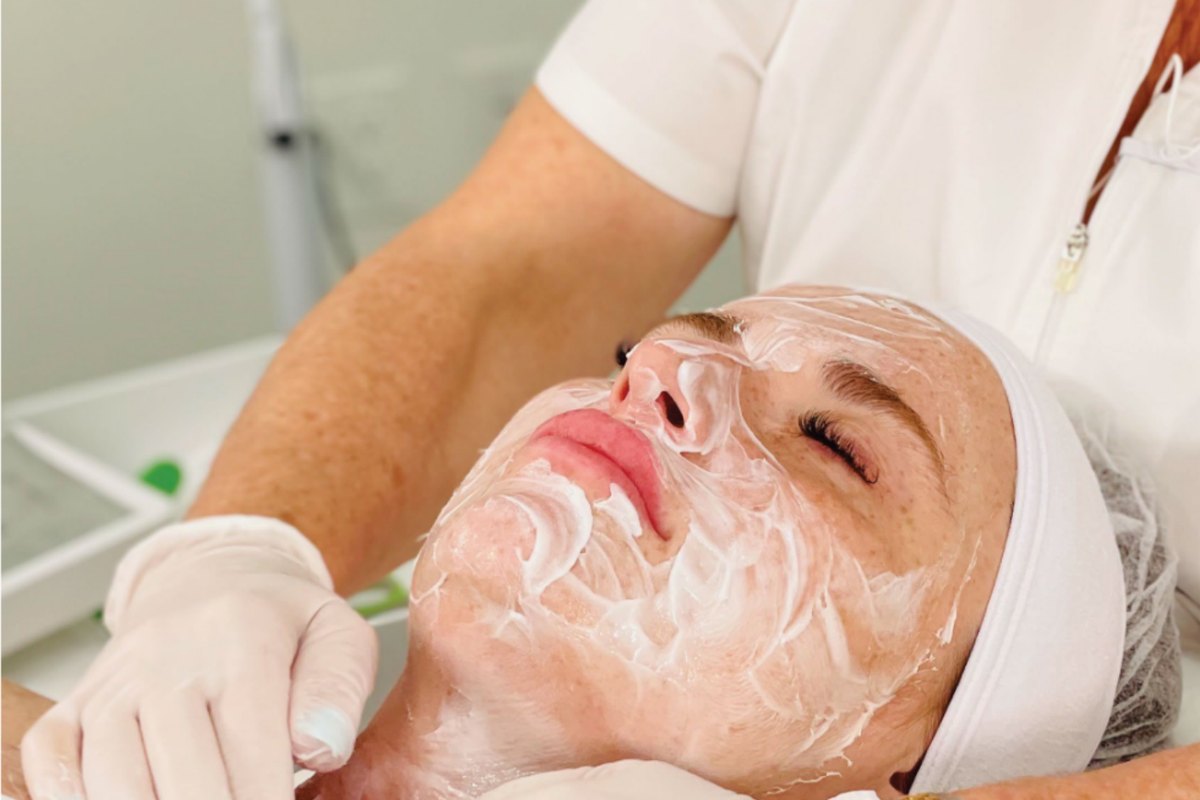
A seaweed mask during a professional facial. Image: Repêchage
How long does a facial take?
Most professional facials take 45 to 90 minutes, including consultation and finishing. The Repêchage Hydra Dew Pure Moisturizing Lift Facial, for example, is a 60-minute treatment, and the four layers of the Four Layer Facial alone take about 35 to 40 minutes before cleansing and finishing. Ask your salon how long to allow in total.
How Repêchage professional facials are built
| Facial | Made for | What makes it different |
|---|---|---|
| Four Layer Facial | Hydration and a refreshed look | Seaweed serum with massage, a hydrating cream with a 10 minute massage, a fresh seaweed mask and a mineral mask on top |
| Biolight Miracle Facial | Dull skin and an uneven-looking tone | A mild glycolic peel with fruit acids, botanicals and peptides |
| Vita Cura 5 Phase Firming Facial | Mature skin | An enzymatic micropeel, two massages and a cooling spirulina seaweed mask |
| Hydra Dew Pure Moisturizing Lift Facial | Dry, compromised skin | A 60-minute hydrating treatment with mastic water, camellia seed oil and seaweed |
Each one uses unidose packs, so every client gets freshly opened products. Our guide to the Repêchage Four Layer Facial walks through that facial layer by layer, and the Signature Facial Treatments page lists what each one includes.
How to prepare for a facial
- Stop scrubs, peels and other exfoliants for a few days beforehand.
- Avoid waxing or threading the face just before.
- Do not book a facial on sunburnt, broken or freshly treated skin.
- Tell your therapist about pregnancy, allergies, skin conditions, cold sores and prescription treatments.
- Arrive without heavy makeup if you can.
What to expect afterwards
- Skin often looks fresher and feels softer and more hydrated. Results vary by skin and by facial.
- Some pinkness after a peel or extractions can be normal for a short time. Tell your therapist if anything feels uncomfortable.
- For the next day or two, keep your routine simple: a gentle cleanser, moisturizer and a broad-spectrum sunscreen. Skip scrubs and acids.
How often to have a facial
Repêchage's professional facials are usually recommended about once a month. More intensive treatments may be booked twice a month at first and then once a month, and peels may be booked about once a week as a short course when a professional recommends it. Your therapist will set the right interval for your skin. Between visits, a home routine does most of the work; see the Repêchage Starter Kits for a simple place to begin.
Frequently asked questions
What are the steps of a facial?
Consultation, cleansing, exfoliation, optional extractions, massage, a treatment mask, and finishing with serum, moisturizer and protection, followed by aftercare advice.
How long does a facial take?
Usually 45 to 90 minutes. Ask your salon how long to allow, including consultation and finishing.
Does a facial hurt?
It should not. A peel can tingle briefly, and extractions can feel uncomfortable. Tell your therapist straight away if anything stings or hurts.
What should I not do after a facial?
Avoid scrubs, acids, waxing, saunas and strong sun for a day or two, and do not pick at your skin. Use sunscreen every morning.
Can I wear makeup after a facial?
It is best to give your skin the rest of the day without makeup. Ask your therapist if you had a peel.
How often should I get a professional facial?
About once a month is a common recommendation for Repêchage facials. More intensive treatments may start at twice a month before settling into once a month, and your therapist may suggest a different interval for your skin.
Which facial is right for me?
It depends on your skin and your goal. A trained professional will recommend one after looking at your skin. You can ask for a free skin consultation and be pointed to a Repêchage-trained professional near you.
Is a facial suitable for sensitive skin?
Yes, if it is chosen for sensitive skin and you tell your therapist about your sensitivity. Repêchage has a professional facial approach for sensitive skin based on its Hydra 4 range.
Sources and further reading
Further reading from dermatology organizations and published research: