
In short: both peels remove the dull layer of dead cells from the surface of the skin, but they do it differently. An enzyme peel (for example a papaya enzyme, called papain) digests the protein that holds dead cells together and is usually very comfortable. A glycolic peel uses an acid to loosen the bond between dead cells and can sting or tingle while it is on the skin. Repechage has a professional peel of each kind: the Vita Cura Enzymatic Micropeel works at a neutral pH of 7, and the Biolight Glyco-Sea Glycolic Peel uses 30% glycolic acid at pH 3.5.
What a peel does
The outer layer of your skin is made of dead cells. When they build up, skin can look dull, feel rough and look uneven in tone. A peel removes some of this layer so the skin underneath shows: smoother, brighter, and better able to take in the products that follow.
How an enzyme peel works
Enzyme peels use a natural enzyme, most often papain from papaya. Papain breaks down the protein (keratin) in the dead surface cells, so they come away without scrubbing or a strong acid. Repechage's Vita Cura Enzymatic Micropeel is made with papain from the latex of green papaya (Carica papaya) and water, at a neutral pH of 7. Repechage says it gently removes dead skin cells to reveal brighter, younger looking skin. It is the first phase of the Vita Cura 5 Phase Firming Facial, a professional facial for mature skin, and each treatment comes in its own single-use packet. Most people feel little or nothing while it is on, which is why an enzyme peel is a popular first peel and a good choice for skin that reacts easily.
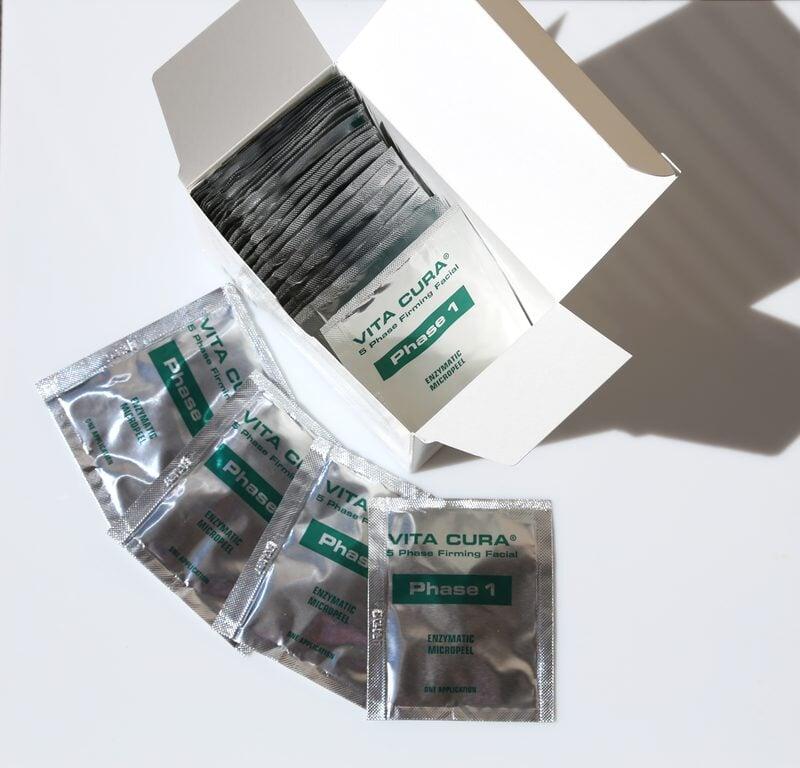
Vita Cura Enzymatic Micropeel: Phase 1 of the Vita Cura 5 Phase Firming Facial, in single-use packets
How a glycolic peel works
Glycolic acid is an alpha hydroxy acid (AHA) made from sugar cane. It is the smallest of the AHAs, so it works quickly: it loosens the bonds between dead cells so that they shed. Repechage's Biolight Glyco-Sea Glycolic Peel uses 30% glycolic acid at pH 3.5, combined with Laminaria digitata seaweed extract, fruit acids, carrageenan and soothing plant extracts such as licorice, chamomile, gotu kola, willow bark, aloe and rosemary. Repechage says the seaweed and botanicals make it a gentle exfoliating peel with less irritation, which helps smooth the look of fine lines and diminish the look of age spots and dryness.
It is Step 2 of the Biolight Miracle Facial, the Repechage professional facial for brightening, and comes in single-use packets (36 in a professional box). It is used only by a trained professional and stays on the skin for about 5 to 7 minutes. A slight burning or tingling can be felt and passes, which is normal; the professional watches the skin throughout. Because it is an acid, it is the peel to leave to a trained hand, and the skin needs sun protection afterwards.
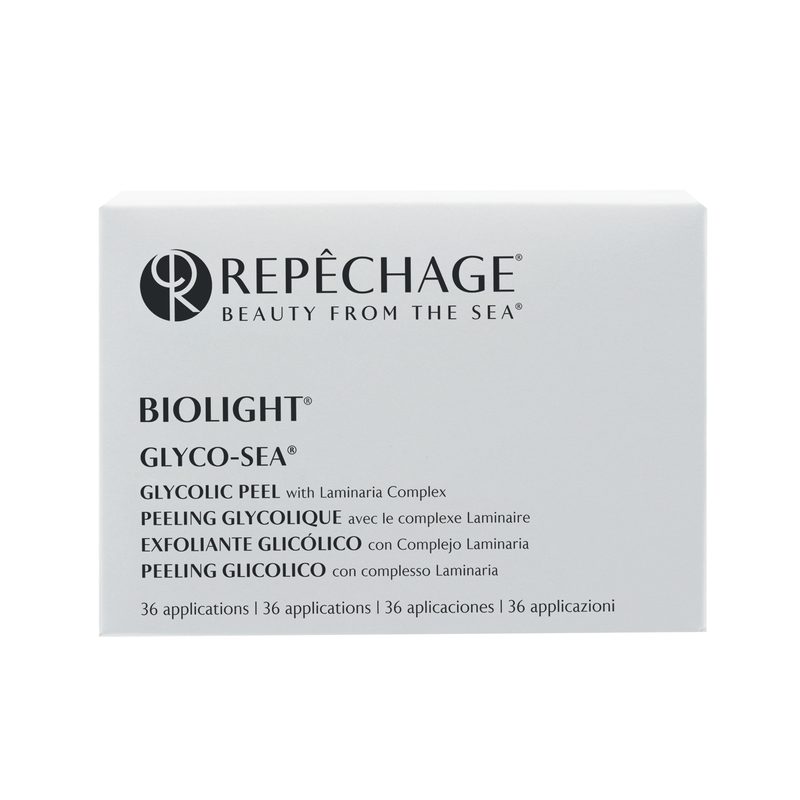
Biolight Glyco-Sea Glycolic Peel, a professional box of 36 single-use applications
Enzyme peel and glycolic peel side by side
| Enzyme peel (papain) | Glycolic acid peel | |
|---|---|---|
| How it works | Digests the protein in dead surface cells | An acid loosens the bond between dead cells |
| Strength in the Repechage peel | Papain enzyme, neutral pH 7 | 30% glycolic acid, pH 3.5 |
| How it feels | Usually comfortable; mild warmth at most | Tingling or brief burning is common and passes |
| Best for | First peels, sensitive or reactive skin, regular gentle renewal, and mature skin as part of a firming facial | Dull, uneven-looking skin, dark spots and pigmentation, under professional guidance |
| Repechage example | Vita Cura Enzymatic Micropeel (Phase 1 of the Vita Cura 5 Phase Firming Facial) | Biolight Glyco-Sea Glycolic Peel (Step 2 of the Biolight Miracle Facial) |
| After the peel | Moisturize and use sunscreen | Moisturize, use sunscreen every day and avoid other exfoliants for several days |
Which peel is right for you?
- Sensitive skin, or your first peel: start with an enzyme peel.
- Dullness, uneven tone or pigmentation: a glycolic peel, as part of a professional facial such as the Biolight Miracle Facial, can be the better fit.
- Mature skin and loss of firmness: the Vita Cura 5 Phase Firming Facial starts with the enzyme peel and follows it with massage and a seaweed mask.
- Not sure: a trained professional can look at your skin and decide. You can ask for a free skin consultation and we will point you to a Repechage-trained professional near you.
Tell your professional if you are pregnant or breastfeeding, taking isotretinoin or using prescription retinoids, or have sunburn, broken skin, a skin condition or a cold sore. Peels are not suitable on skin in any of these conditions.
Gentle exfoliation at home
A professional peel is done in the salon or clinic. Between visits, these JB Skincare products give a gentler version at home. Patch test first and add one at a time.
- Rapidex Marine and Alpha Hydroxy Acid Rapid Exfoliator: a single-use, pre-saturated swab of marine and alpha hydroxy acid exfoliator made for professional-grade exfoliation at home.
- One-Minute Exfoliating Mask: exfoliates with rice bran wax spheres and lactic acid, with seaweed, lemongrass and cucumber.
- Honey and Almond Scrub: a gentle scrub for all skin types, including sensitive skin.
Read more in our guide to exfoliation with Repechage.
Looking after your skin after a peel
- Use a broad-spectrum sunscreen every morning and avoid direct sun for the first days.
- Moisturize and keep the routine simple: a gentle cleanser and a moisturizer.
- Do not scrub, pick or peel flakes, and do not use another exfoliant for several days.
- Follow the advice of the professional who treated you.
Frequently asked questions
Is an enzyme peel better than a glycolic peel?
Neither is better for everyone. An enzyme peel is milder and more comfortable; a glycolic peel works faster and is often chosen for dullness and uneven tone. The right one depends on your skin and your goal.
How strong is the Repechage glycolic peel?
The Biolight Glyco-Sea Glycolic Peel uses 30% glycolic acid at pH 3.5, with seaweed and soothing plant extracts added to keep irritation down. It is a professional peel, applied and timed by a trained professional, not a home product.
Does a glycolic peel hurt?
You may feel tingling or a slight burning while it is on the skin. It should pass quickly, and the professional can remove the peel at once if it is too strong.
Can I have an enzyme peel and a glycolic peel in the same visit?
That is a decision for your professional. At home, do not combine exfoliants in the same session.
How often can I have a peel?
Repechage's professional facials are usually recommended about once a month. Your professional will set the right interval for your skin.
Are peels safe for Indian skin tones?
Skin that is prone to pigmentation needs extra care: a patch test, a trained professional, and strict sun protection afterwards. Ask your professional to choose the strength for you.
Where can I get a Repechage peel in India?
Repechage professional treatments are available through salons, spas and clinics that JB Skincare, the exclusive authorized importer and distributor, supplies and trains. See the Signature Facial Treatments, which include the Biolight Miracle Facial and the Vita Cura 5 Phase Firming Facial, or read about Repechage's signature Four Layer Facial.