
In short: a night cream is your everyday night moisturizer. An overnight face mask, or sleeping mask, is usually a gel or gel-cream that forms a light sealing layer on top, used a few times a week for an extra boost of hydration. Dry skin can use both: night cream every night, sleeping mask on top two or three times a week. Oily skin may prefer a light sleeping mask instead of a cream on some nights.
Sleeping mask vs night cream at a glance
| Night cream | Overnight face mask | |
|---|---|---|
| Texture | Cream, from light to rich | Often gel or gel-cream; some are richer |
| How often | Every night | Two or three nights a week |
| Main job | Moisturize and treat (tone, texture) | Seal in hydration as a top layer |
| Order | After serum | Last step, over or instead of cream |
| Rinse off? | No | No; wash your face in the morning |
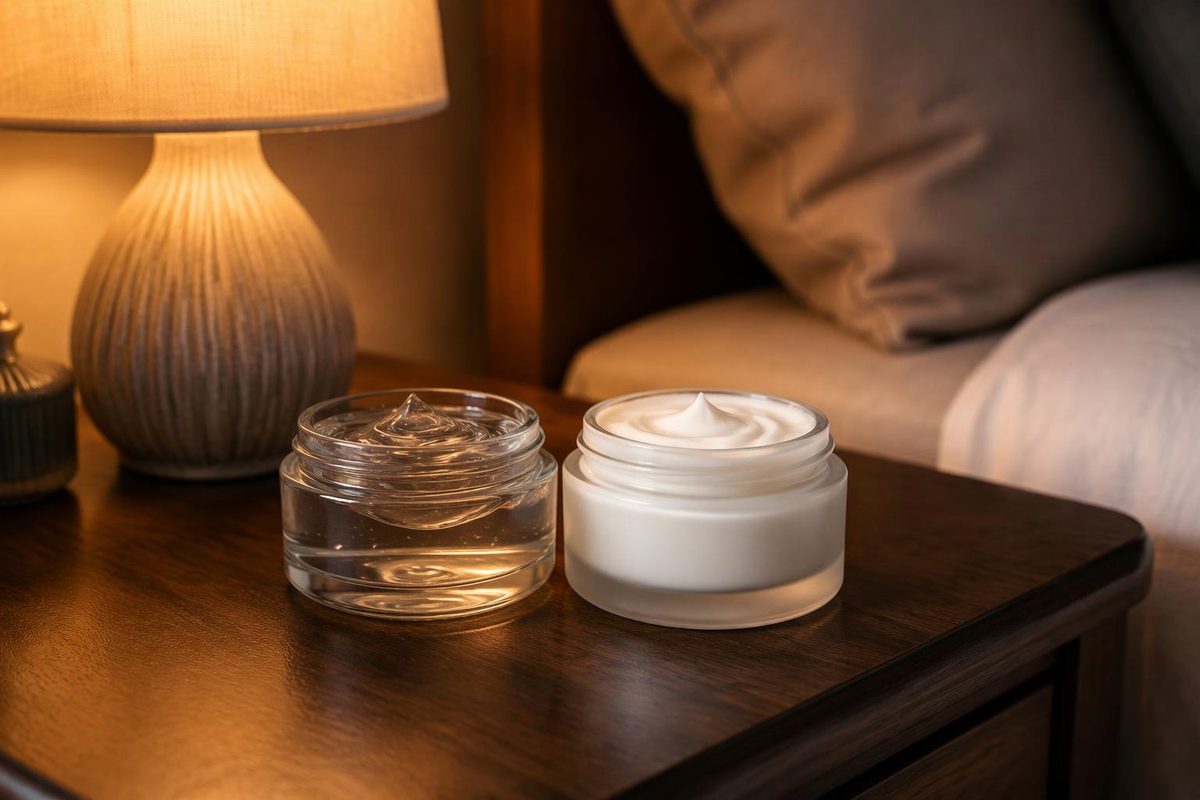
A sleeping mask is usually a lighter, sealing layer; a night cream is your everyday night moisturizer.
Are night cream and sleeping mask the same?
Not quite, though the line is blurry. Sleeping masks are designed as an occasional top layer that reduces water loss overnight. Night creams are designed to be your nightly moisturizer and often contain treatment ingredients. A review of moisturizers explains how occlusive top layers help skin hold water.
Which one should you use?
- Dry skin: night cream nightly, sleeping mask on top a few times a week. See night cream for dry skin.
- Oily skin: a light night moisturizer, or a gel sleeping mask on its own. See night cream for oily skin.
- Dull skin or dark spots: a brightening night cream. See night cream for pigmentation.
- Before an event: a sleeping mask the night before for a fresh look. See how to get glowing skin overnight.

Biolight Brightening Overnight Cream
Repêchage Biolight Brightening Overnight Cream works like a rich overnight treatment: a hydrating night cream with seaweed extracts, licorice, gotu kola and willow bark for uneven tone. Use it as your night cream on cleansed skin, with upward and outward strokes. If your skin is very dry, add a thin layer of a plain sleeping mask or balm on top on some nights. For the full routine, see our Biolight home regimen.
Can I use an overnight mask every night?
Gentle hydrating sleeping masks can be used most nights, but they are usually not needed every night if you use a good night cream. Masks with exfoliating acids should be used only a few times a week. If you break out, use them less.
How to use both
- Cleanse.
- Serum, if you use one.
- Night cream.
- A thin layer of sleeping mask on top, two or three nights a week.
- Wash your face in the morning.
For the order of all night steps, see our night skin care routine.
Frequently asked questions
What is the difference between a sleep mask and a night cream?
A night cream is your nightly moisturizer. A sleeping mask is an occasional top layer that seals in hydration.
Are night cream and sleeping mask the same?
Not quite, but they overlap. Read what each product does.
Can I use an overnight mask every night?
Gentle hydrating ones, often yes. Exfoliating ones, no.
Can I use night cream and a sleeping mask together?
Yes. Night cream first, mask on top.
Is an overnight mask good for oily skin?
A light gel sleeping mask can suit oily skin, sometimes in place of a cream.
Do I wash off an overnight mask?
Yes, with your normal morning cleanse.
Sources and further reading
Further reading from dermatology organizations and published research: