
In short: a night cream for dry skin should be richer than your day moisturizer. Look for ingredients that attract water (glycerin, hyaluronic acid), ingredients that soften (plant oils, shea, squalane) and ingredients that hold water in (ceramides, petrolatum). Apply it on slightly damp skin as the last step of your night routine. In winter, it is the step dry skin needs most.
Why dry skin needs a night cream
Skin loses more water at night, and many people sleep in rooms with a heater or AC. Night is also when you can wear a richer texture without worrying about shine or makeup. A good night cream gives dry skin a long stretch of moisture, so it wakes up softer and less tight.
Research on how moisturizers work explains the three types of ingredients a cream combines: humectants, emollients and occlusives.
What to look for in a night cream for dry skin
| Type | Examples | What it does |
|---|---|---|
| Humectants | Glycerin, hyaluronic acid, aloe | Draw water into the skin |
| Emollients | Squalane, shea butter, plant oils | Smooth and soften |
| Occlusives | Ceramides, petrolatum, waxes | Hold water in overnight |
| Calming plants | Chamomile, gotu kola, seaweed | Soothe dry, irritated skin |
Skip heavy fragrance and strong actives if your skin stings. If you use retinol or acids, alternate nights and ask a dermatologist how to combine them.
Night cream vs day cream
- Texture: night creams are usually richer; day creams lighter so makeup sits well.
- Sunscreen: day creams may contain SPF; night creams do not need it.
- Actives: some night creams carry ingredients for tone or texture that work while you sleep.
Dry skin often does well with a moisturizer in the morning and a richer night cream in the evening. Our guide to moisturizer for dry skin in winter covers the day step.
How to apply night cream
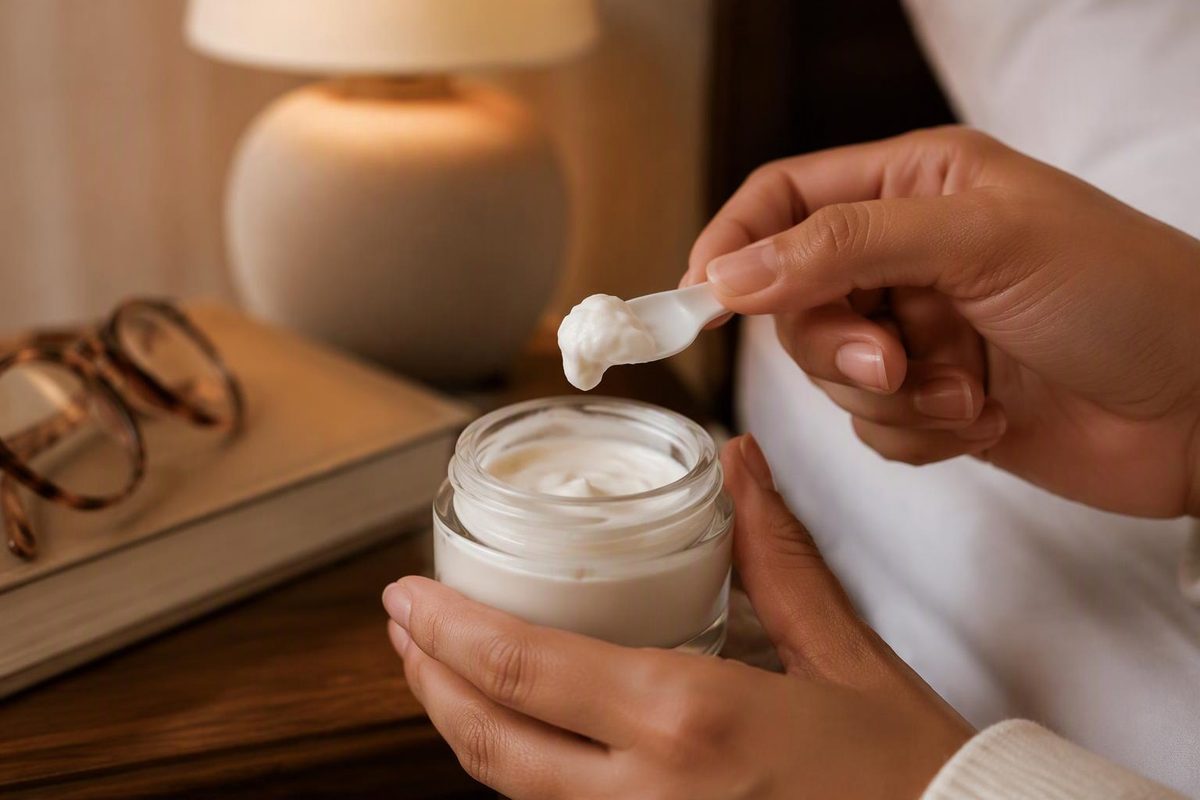
Dry skin usually likes a richer texture at night than in the day.
- Remove makeup and sunscreen, then cleanse gently.
- Mist or tone while skin is still damp.
- Apply a serum if you use one.
- Warm a small amount of night cream between your fingertips.
- Apply with upward and outward strokes, including the neck.
- Give it a few minutes before your head touches the pillow.
Our night skin care routine shows the full order, and face massage at home turns this step into a few minutes of rest.
A night cream for dry skin with uneven tone

Biolight Brightening Overnight Cream
If your skin is dry and you also notice dark spots or dullness, a brightening night cream can cover both. The Repêchage Biolight Brightening Overnight Cream has a rich, hydrating texture with Laminaria seaweed extract, licorice root, gotu kola, chamomile and orange extract. Apply it to cleansed skin at night with upward and outward strokes. See the Biolight home regimen for pigmentation for the full routine. Not sure which night cream suits you? Ask for a free skin consultation.
Night care tips for winter
- Use lukewarm water to wash at night; hot water dries the skin.
- Run a humidifier or keep a bowl of water near the heater.
- Do not skip moisturizer after a late night; a quick mist and cream is enough.
- Put a little cream on dry lips, elbows and heels too. See our winter foot care routine.
Frequently asked questions
Which night cream is good for dry skin?
One that combines water-attracting ingredients such as glycerin or hyaluronic acid with softening oils and ceramides, in a richer texture than your day cream.
Can I use a day cream at night?
Yes, if it has no sunscreen. Dry skin often prefers something richer at night.
Should I apply night cream on damp skin?
Slightly damp skin is ideal. The cream holds in the water that is already there.
Is night cream necessary in winter?
For dry skin, it is one of the most helpful steps in winter, when skin loses water faster.
How much night cream should I use?
About a pea to an almond-sized amount for the face, a little more for the neck.
Can men use night cream?
Yes. Dry skin needs moisture whatever your gender, and night is a convenient time for it.
Sources and further reading
Further reading from dermatology organizations and published research: