
In short: in India, a "face pack" usually means a paste that dries on the skin, such as clay or multani mitti, and is rinsed off. A "face mask" is a broader term: cream, gel, sheet, sleeping and exfoliating masks, some of which stay moist and some of which you leave on overnight. A peel-off mask dries to a film that you pull off. Packs suit oily skin; hydrating masks suit dry skin; peel-offs are the harshest and best used rarely, if at all.
Face pack vs face mask vs peel-off
| Face pack | Face mask | Peel-off mask | |
|---|---|---|---|
| Texture | Paste that dries and sets | Cream, gel, sheet or exfoliating | Gel that dries to a film |
| Removal | Rinse off | Rinse, remove sheet, or leave on | Peel off |
| Main job | Absorb oil, deep cleanse | Hydrate, soothe, brighten or exfoliate | Lift surface flakes and fine hairs |
| Best for | Oily and combination skin | Most skin types | Oily, non-sensitive skin, occasionally |
| Risk | Over-drying if left too long | Low | Redness and irritation |
In practice, many brands use the words interchangeably, so read what the product does rather than its name.
Which one suits your skin?
- Oily skin: a clay pack or exfoliating mask. See face mask for oily skin.
- Dry skin: a hydrating cream or seaweed mask. See what seaweed does for skin.
- Dull skin: an exfoliating mask then a hydrating mask. See face mask for glowing skin.
- Sensitive skin: a calming hydrating mask; skip peel-offs.
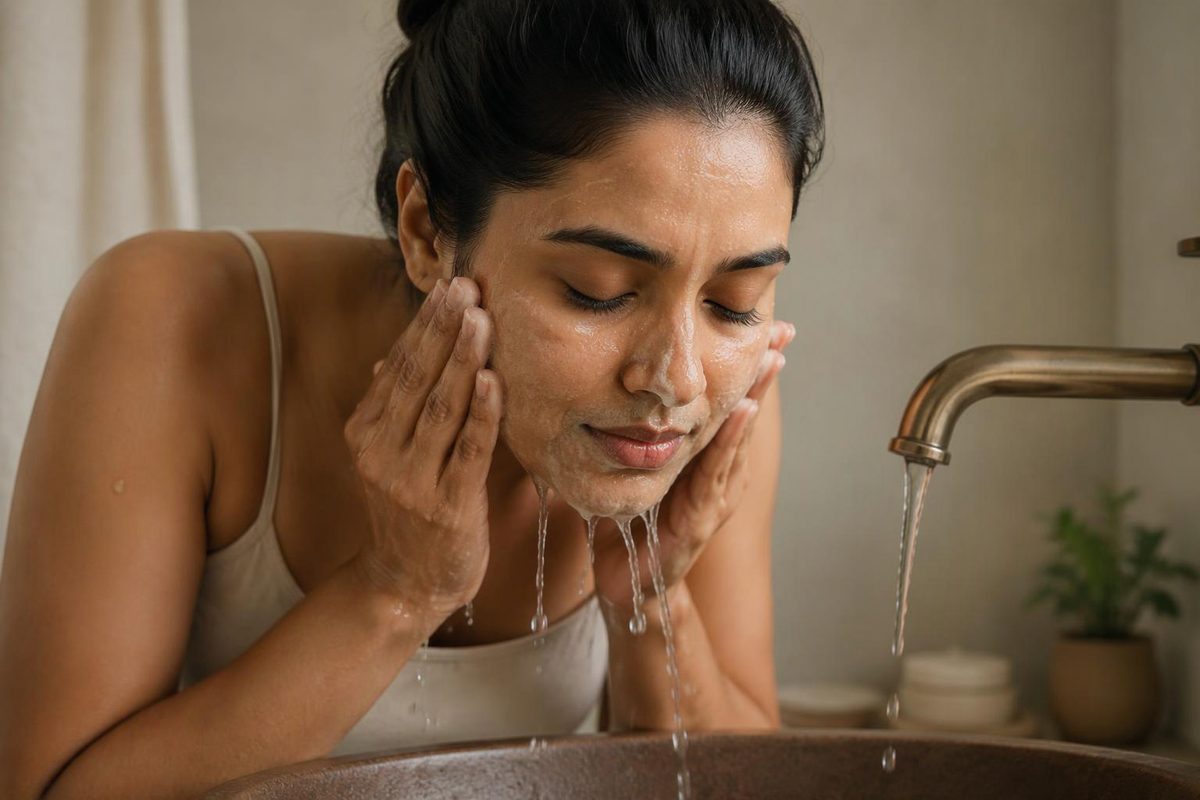
Packs set and are rinsed off; masks can be rinse-off, sheet or leave-on.
Can we use both a face pack and a face mask?
Yes. Apply the pack first to cleanse and absorb oil, rinse, then use a hydrating mask. This "multi-masking" also works zone by zone: a pack on the T-zone and a hydrating mask on the cheeks. Do not stack two exfoliating products.
How often to use each
- Clay pack: once or twice a week.
- Exfoliating mask: once or twice a week.
- Hydrating mask: two or three times a week.
- Peel-off: once a month at most, and not on sensitive skin.
Should I apply a face pack daily? No. Daily clay packs can over-dry skin. See how often to use a face mask.

Repêchage One-Minute Exfoliating Mask sits between a pack and a mask: it exfoliates with rice bran wax spheres and lactic acid and absorbs excess oil, but it is rinsed off after one minute rather than left to dry. It is a gentler alternative to peel-off masks for removing dull surface cells.
Do dermatologists recommend face masks?
Dermatologists generally see masks as optional extras, not essentials. The basics are cleansing, moisturizing and sunscreen. A mask can add hydration or gentle exfoliation once or twice a week. The American Academy of Dermatology's advice on exfoliating safely applies to exfoliating masks too.
Frequently asked questions
What is the difference between a face pack and a face mask?
A face pack is usually a paste that dries and is rinsed off. A face mask can be cream, gel, sheet or exfoliating, and may stay moist or be left on.
What to apply first, face pack or face mask?
The cleansing pack first, then a hydrating mask.
Are peel-off masks bad for skin?
They can irritate, especially sensitive skin. Use rarely, if at all.
Should I apply a face pack daily?
No. Once or twice a week is enough.
Do dermatologists recommend face masks?
As optional extras. Cleansing, moisturizing and sunscreen come first.
Can we use both a face pack and a face mask?
Yes, one after the other or on different zones.
Sources and further reading
Further reading from dermatology organizations and published research: